
The Top 5 Scientific Breakthroughs In History
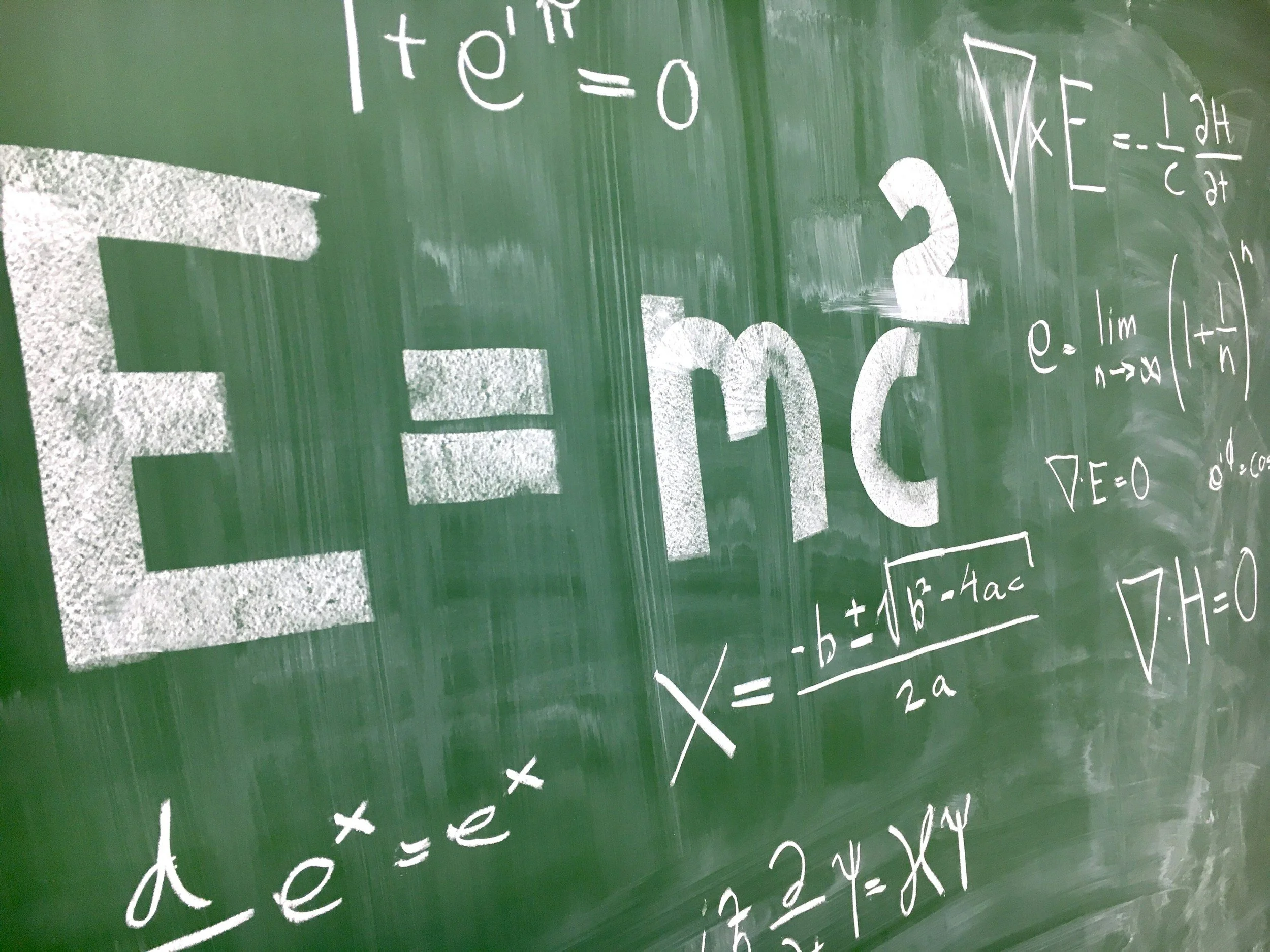
Image from Unsplash
Science is cumulative, built on thousands of small discoveries, each adding one piece to our ever-growing pool of human knowledge. Every major breakthrough is the result of years, sometimes even centuries, of work, with each new discovery building upon the last. Progress often occurs when scientists become experts in a specialized part of their discipline, enabling them to develop a profound understanding of the subject matter. However, it’s important to occasionally step back and reflect on the broader perspective, considering the monumental achievements that have shaped our understanding of the world and transformed people’s lives. Some breakthroughs truly stand out for their overarching importance to humanity. Here, I will recount five of the most important scientific discoveries in all of human history.
1. A fundamental characteristic of life, DNA is found in all known living organisms on Earth. However, it wasn’t until 1953 that James Watson and Francis Crick proposed a model for the double helix structure, which significantly expanded our understanding of the genetic code and protein synthesis. Though their work was the final step in the intellectual venture, it built upon the discoveries of many previous scientists. Namely, Rosalind Franklin and Maurice Wilkins, who used X-ray diffraction to capture images of DNA crystals, provided strong evidence for a helical structure. Additionally, Erwin Chargaff had discovered that DNA contains equal amounts of adenine and thymine, as well as guanine and cytosine. Thus, it was left to Watson and Crick; they published their findings on April 25, 1953, in a one-page paper titled “A Structure for Deoxyribose Nucleic Acid.” Still, this discovery did not gain widespread prominence until the late 1950s, when the DNA structure became integral to controlling protein synthesis. The ramifications of DNA’s structure have since been vast. The ability to sequence genes has led to the development of life-saving technologies, such as genetic engineering and personalized medicine. DNA has also become a vital tool in the treatment of diseases, enhancing agriculture, and even solving crimes through forensic analysis. Although perhaps not the most monumental scientific breakthrough in history, the discovery of DNA's structure marked the beginning of modern molecular biology.
2. Before Louis Pasteur and Robert Koch developed the germ theory of disease, the origins of illness were widely misunderstood. Many people believed in wild theories, ranging from “bad air” that could create disease to “evil spirits” that would magically spread illnesses. However, Pasteur and Koch eventually uncovered the true cause of those diseases: microorganisms. Pasteur began his work on fermentation in the 1850s, demonstrating that fermentation is a biological process driven by living yeast rather than solely a chemical process. This led to the understanding that specific microorganisms, such as bacteria, cause diseases like silkworm blight and anthrax. That discovery proved how microbes could cause both fermentation and disease. Pasteur’s experiments provided strong evidence for germ theory, which was later confirmed by Robert Koch. In the late 1800s, Koch proved that specific germs, such as the bacterium responsible for anthrax, could cause particular diseases through his experiments with infected animals. His work led to the formulation of Koch’s Postulates, a set of guidelines for establishing a direct relationship between a microbe and a specific disease. This discovery profoundly changed medicine. When microorganisms were discovered to cause disease, it paved the way for the development of vaccines, sterilization techniques, and antibiotics. It allowed cities and towns to develop better ways to keep themselves clean, thereby improving sanitation and hygiene. Germ theory has continued to shape global responses to health crises, including COVID-19, transforming our approach to disease prevention and, in turn, shaping healthcare as we know it today.
3. Albert Einstein’s theory of relativity, published in the early 20th century, completely revolutionized our understanding of time, space, and gravity. In 1905, Einstein published the theory of special relativity, which described the relation between space, time, mass, and energy. It is based on two fundamental principles: the speed of light is constant, and the laws of physics are invariant in all non-accelerating frames of reference. His equation, E=mc2, showed that energy and mass are entangled and that even small amounts of mass confer a huge amount of energy. More importantly, as objects approach the speed of light, their mass increases, requiring infinite energy to accelerate further, making the speed of light the theoretical upper limit for all objects. Special relativity explained how objects move in inertial reference frames (systems with no net force), but didn’t account for gravity. In 1915, therefore, Einstein introduced his theory of general relativity to describe gravity. According to this theory, gravity is not a force but a warping of space and time by mass; the bigger the mass, the greater the distortion. A good analogy for this is marbles on a rubber sheet. In this model, the rubber sheet represents spacetime, while marbles placed on it create a compression of the space. This warping explains how massive objects like stars bend light, and why black holes, with immense mass in a small space, can trap light entirely. These breakthroughs laid the groundwork for modern cosmology. These theories continue to shape everything from black hole research to the development of quantum mechanics. It fundamentally revised classical mechanics and continues to influence multiple fields, including space exploration, nuclear energy, and our understanding of time itself.
4. When Isaac Newton published his work Philosophiae Naturalis Principia Mathematica (Mathematical Principles of Natural Philosophy) in 1867, the laws of motion and his law of universal gravitation provided a unified framework for understanding how objects move in space and interact with each other. He came up with three laws of motion:
The Law of Inertia: An object at rest stays at rest, and an object in motion stays in motion unless acted upon by an unbalanced force.
The Law of Acceleration: The acceleration of an object is directly proportional to the net force acting on it and inversely proportional to its mass (F=ma)
The Law of Action-Reaction: For every action force, there is an equal and opposite reaction force.
Moreover, Newton suggested that gravity was a “universal” force and that all the planets were kept in their respective orbits by the Sun's gravity. His law of universal gravitation stated that every mass attracts every other mass with a force proportional to the product of their masses and inversely proportional to the square of the distance between them. These insights explained everything from the falling apple to the motion of planets. Newton’s work laid the foundation for classical mechanics, continuing to cascade into modern fields of engineering, astronomy, and aerospace. Eventually, his discovery would make space travel possible and enable the development of the steam engine and other technologies that would drive the Industrial Revolution. While modern theories like relativity have since superseded these laws, they remain cornerstones of our understanding of the physical world and provide a foundation for further scientific development.
5. Perhaps the most famous scientific discovery ever is the theory of natural selection. Charles Darwin and Alfred Russel Wallace independently developed the theory of natural selection in the mid-1800s, which explained how species evolve through the survival and reproduction of individuals with advantageous traits. Drawing inspiration from Thomas Malthus’ ideas of population pressure, Darwin realized that all organisms must compete for limited resources, and those best suited to their environment are more likely to survive and reproduce. Darwin was influenced by his observations during a five-year journey aboard the HMS Beagle, particularly in the Galápagos Islands, where he noted the unique adaptations of species like finches and tortoises. Noting the subtle differences between very similar animals in different environments, Darwin concluded that they shared a common ancestry. Although Darwin had been working on his theory as early as the 1830s, it was not until Wallace shared similar findings on natural selection with him that Darwin published On the Origin of Species in 1859. The theory of evolution initially sparked great controversy from both the scientific community and the general public, who were astounded by the social and religious repercussions of the finding. In particular, the church disputed evolution because it appeared to contradict literal interpretations of the Bible, especially concerning the creation of humans and the existence of Adam and Eve. Despite its controversy, the theory of evolution has stood the test of time. It provided a unifying framework for the diversity of life on Earth, combining genetics, paleontology, and ecology into a cohesive whole. The theory established the principle that organisms change over time, which is directly reflected in their genetic material, paving the way for the study of genomics and the molecular mechanisms of evolution. Ultimately, Darwin’s theory has reshaped not only science but human society, challenging our view of life’s origins and inspiring new ways of thinking about the natural world and our role within it.
The greatest scientific breakthroughs in history are the foundations upon which modern civilization rests. From the molecular basis of life to the vast expanses of space, these discoveries have reshaped our understanding of the universe and our place within it. As we look toward the future, it is clear that our thirst for knowledge will continue to drive progress. Who knows what new breakthroughs await? Perhaps they will be as profound and world-altering as the five here, each helping us unlock more of the universe we inhabit.
